
ฝากข้อความไว้
หากคุณสนใจในผลิตภัณฑ์ของเราและต้องการทราบรายละเอียดเพิ่มเติม โปรดฝากข้อความไว้ที่นี่ เราจะตอบกลับคุณโดยเร็วที่สุด



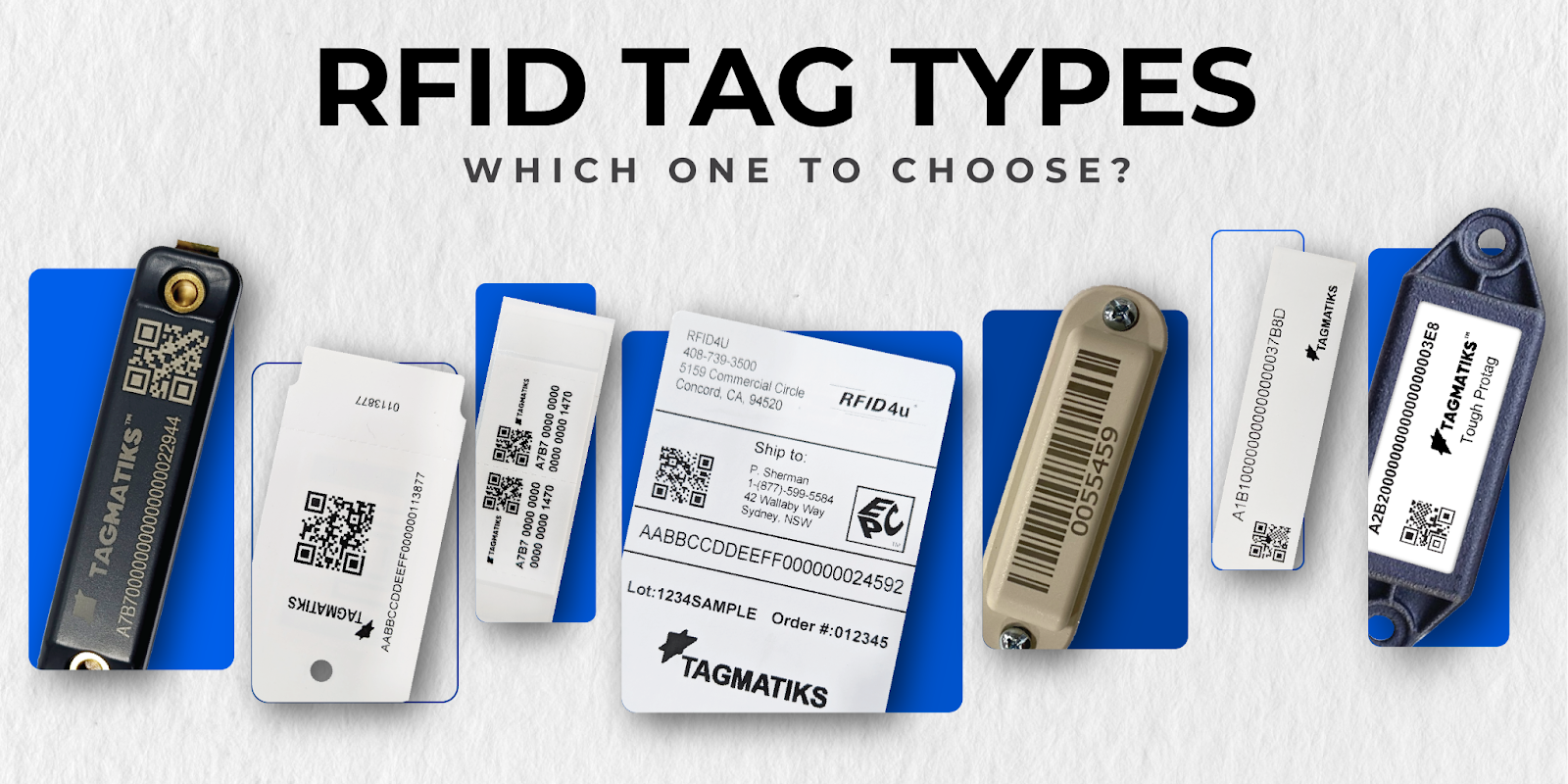
RFID technology is increasingly used in warehouse management, retail, manufacturing, logistics, healthcare, agriculture, asset tracking, and many other industries. However, choosing an RFID tag is not simply a matter of selecting a tag with the right size or reading distance. Different applications have different requirements for frequency, material, environment, memory, mounting method, and read performance.
An RFID tag that performs well in a warehouse may not work reliably on metal assets or liquid-filled containers. Similarly, a tag designed for short-term inventory tracking may not be suitable for outdoor equipment that needs to operate for years. Therefore, understanding the key factors behind RFID tag selection is essential for building a reliable and cost-effective RFID system.
The first factor to consider is the RFID frequency because frequency directly affects reading distance, application scenarios, and compatibility with readers.
The three common RFID frequency categories are LF (Low Frequency), HF (High Frequency), and UHF (Ultra High Frequency).
LF RFID generally operates around 125–134 kHz and provides relatively short reading distances. It is commonly used for animal identification, access control, and applications where close-range identification is sufficient.
HF RFID typically operates at 13.56 MHz. It offers a moderate reading range and is widely used in libraries, payment systems, NFC applications, access cards, and item-level identification.
UHF RFID commonly operates within the 860–960 MHz range, depending on regional regulations. UHF tags can provide longer reading distances and support high-speed, multi-tag identification. This makes them particularly suitable for warehouse management, logistics, retail inventory, vehicle management, and industrial applications.
Therefore, before choosing a tag, determine which RFID frequency your reader and application require.
The operating environment is one of the most important considerations when choosing an RFID tag.
For indoor warehouse applications, a standard paper or PET UHF RFID label may be sufficient. However, industrial applications may expose tags to water, dust, chemicals, vibration, impact, high temperatures, or outdoor weather conditions.
For harsh environments, rugged RFID tags made from materials such as ABS, PC, PPS, ceramic, or other specialized materials can provide better durability.
For example, an RFID tag installed on a reusable industrial container may need to survive repeated handling and transportation. A tag attached to outdoor equipment may need protection against UV radiation and moisture. A tag used in manufacturing may need to withstand heat or chemical exposure.
Before selecting a tag, ask:
The answers will determine the required tag construction and protection level.
RFID performance is strongly influenced by the material on which the tag is installed.
Materials such as cardboard, paper, plastic, wood, and fabric are generally RFID-friendly. However, metal and liquid can significantly affect RF performance, particularly for UHF RFID.
When an ordinary UHF RFID label is placed directly on a metal surface, its read performance may decrease dramatically. In this situation, an on-metal RFID tag with a specially designed antenna structure is usually a better solution.
For liquid-filled containers, standard tags may also experience reduced performance because liquids can absorb or detune RF energy. Specialized tag designs or optimized placement may therefore be necessary.
This means you should not select an RFID tag independently from the object being identified. The tag and the target material need to be considered together.
Read range is another important factor.
Different applications require different reading distances. For example, a library application may only require a short reading distance, while a warehouse portal may need to identify items several meters away.
UHF RFID tags generally offer longer reading distances than LF and HF tags, but the actual range depends on multiple factors, including:
Therefore, a manufacturer should avoid choosing a tag solely based on a claimed maximum reading distance.
Instead, define the actual working distance required by the application and test the tag under real operating conditions.
RFID tags are available in many different sizes and shapes. The physical dimensions of the tag can affect both installation and RF performance.
A larger antenna can sometimes provide better RF performance, while a smaller tag may be more convenient for compact products.
For example, small RFID tags may be appropriate for:
Larger tags may be more appropriate for:
The tag should be large enough to achieve the required performance while remaining practical for installation.
Custom shapes can also be useful when standard rectangular tags do not fit the target object.
How the RFID tag will be attached is another factor that is often overlooked.
Common mounting methods include:
For temporary inventory tracking, adhesive labels may be sufficient. For long-term industrial asset tracking, mechanical fastening may provide greater reliability.
The adhesive itself also needs to match the application. Outdoor equipment, for example, may require an adhesive capable of handling temperature changes, moisture, and UV exposure.
A well-designed RFID tag should remain securely attached throughout the expected service life.
Not every RFID application requires the same amount of memory.
Some systems only need a unique identifier stored in the tag. In these cases, a relatively small memory capacity may be sufficient.
Other applications may require additional information, such as:
For many modern RFID systems, however, it is often better to store only a unique ID on the tag and maintain detailed information in a backend database. This approach can simplify tag management and reduce memory requirements.
Therefore, determine whether your application requires read-only identification, writable memory, or larger EPC/user memory before selecting a chip.
The RFID chip is the core component that stores and processes identification information.
Different chips provide different levels of memory, sensitivity, security features, and performance. When comparing RFID tags, you should consider not only the physical tag but also the chip used inside it.
For UHF RFID applications, chip selection can affect:
If the application involves large quantities of tags being read simultaneously, chip performance becomes especially important.
For example, a warehouse may need to identify hundreds of tagged items as they pass through an RFID gate. In such a scenario, choosing a chip optimized for reliable multi-tag reading can significantly improve system performance.
RFID tags may be used in different ways. Some applications only require reading, while others require information to be written or updated.
If data needs to be changed during the product lifecycle, write performance should be evaluated alongside read performance.
For example, a reusable asset may have information updated whenever it moves between locations. In this situation, the RFID system needs a tag that supports reliable writing as well as reading.
It is also important to evaluate performance under realistic conditions rather than relying only on laboratory specifications.
For disposable packaging, RFID tags may only need to function for several weeks or months. For industrial assets, however, tags may need to remain readable for five, ten, or even more years.
Long-term applications require attention to:
A low-cost tag may appear attractive initially, but replacing failed tags can create significant labor and operational costs.
For long-term asset tracking, it is usually better to evaluate total cost of ownership rather than simply the initial tag price.
RFID frequencies and operating parameters are subject to regional regulations. UHF RFID systems, in particular, may operate on different frequency ranges depending on the country or region.
Therefore, make sure that the selected tag is compatible with the RFID reader and frequency band used in your target market.
You should also verify compatibility with:
A technically excellent RFID tag is not useful if it cannot work reliably with the rest of the RFID infrastructure.
Cost is naturally an important factor, especially when thousands or millions of RFID tags are required.
However, choosing the cheapest RFID tag is not always the best decision.
The right approach is to balance:
Tag price + performance + durability + installation cost + replacement cost + system efficiency.
For high-volume disposable applications, reducing the unit price can have a significant impact on overall project cost. For high-value assets, however, reliability may be more important than saving a small amount on each tag.
A professional RFID supplier can help compare different tag options based on the actual application rather than simply recommending the cheapest product.
One of the most important recommendations is to conduct real-world testing before purchasing RFID tags in large quantities.
RFID performance can change considerably depending on the target object, installation position, reader, antenna, and surrounding environment.
A practical test should evaluate:
Ideally, testing should be performed using the same reader, antenna, mounting method, and target objects that will be used in the final project.
This can prevent expensive problems after large-scale deployment.
Choosing the right RFID tag requires much more than comparing dimensions and prices. The best RFID tag depends on the frequency, application environment, target material, required read range, physical size, mounting method, memory capacity, chip performance, durability, compatibility, and overall project cost.
For simple applications, a standard RFID label may be enough. For challenging environments involving metal, liquids, outdoor exposure, high temperatures, or long-term asset management, a specialized RFID tag may be necessary.
The most effective approach is to start with the application requirements and then select the RFID tag accordingly. Working with an experienced RFID manufacturer and solution provider can also make the process easier because the supplier can recommend suitable tag designs and conduct performance testing based on real-world requirements.

ข้อมูลโดยละเอียดและไฟล์ PDF

อีเมลติดต่อฝ่ายสนับสนุน

คำแนะนำทางเทคนิคจากผู้เชี่ยวชาญ

อีเมลติดต่อฝ่ายสนับสนุน


วาส

ลิงก์

ยูทูบ

เฟซบุ๊ก
ฝากข้อความไว้
สแกนเพื่อแชร์ไปยัง WeChat/WhatsApp :



 IPv6 รองรับเครือข่าย