
ฝากข้อความไว้
หากคุณสนใจในผลิตภัณฑ์ของเราและต้องการทราบรายละเอียดเพิ่มเติม โปรดฝากข้อความไว้ที่นี่ เราจะตอบกลับคุณโดยเร็วที่สุด




เป็นการซื้อที่ดีที่สุดที่ฉันทำในฤดูหนาวนี้เลย! สีสันและการถักทอสวยงามมาก และใส่สบายสุดๆ! เดินทางจากนิวยอร์กไปไมอามีโดยไม่ถอดเลยสักครั้ง น่ารักสุดๆ!!
The construction industry is undergoing a major digital transformation as companies seek more efficient ways to manage materials, equipment, workers, and project schedules. Traditional construction management methods often rely on manual inspections, paper records, spreadsheets, and barcode scanning. Although these methods can support basic operations, they become increasingly difficult to maintain on large construction sites where thousands of materials, tools, and machines move between different locations every day.
Radio Frequency Identification (RFID) technology offers a practical solution to these challenges. By using radio waves to identify and track tagged objects automatically, RFID enables construction companies to collect real-time data, improve inventory visibility, reduce manual work, and strengthen operational control. Depending on the system configuration, RFID can identify multiple tagged items simultaneously without requiring direct line of sight.
From building material management and heavy equipment tracking to worker access control and prefabricated component monitoring, RFID has a wide range of applications throughout the construction lifecycle. As construction projects become more complex, RFID technology is becoming an important tool for improving productivity, accountability, and project transparency.
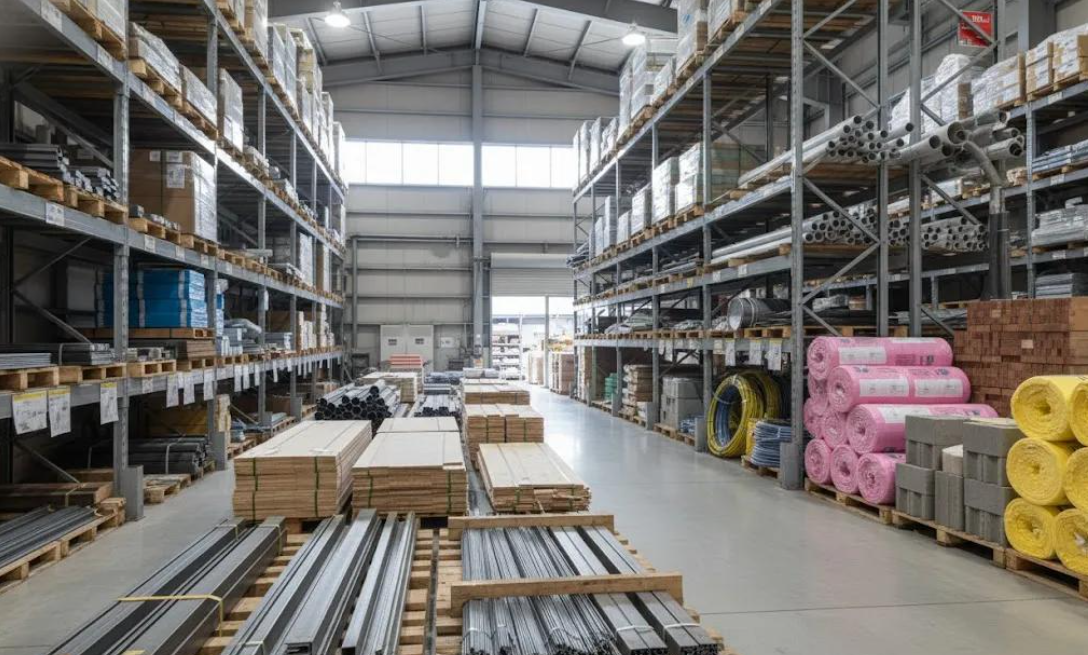
Material management is one of the most important applications of RFID in the construction industry. A typical construction project may involve steel bars, cement, pipes, electrical components, insulation materials, and numerous other supplies. If these materials are not properly tracked, project managers may face inventory discrepancies, misplaced items, unnecessary purchases, and delays caused by material shortages.
RFID technology helps construction companies establish a more reliable material tracking system. RFID tags can be attached to material packages, pallets, containers, or individual components, depending on the value and tracking requirements of the items. Each tag carries a unique identification number that can be associated with information such as material type, supplier, quantity, delivery date, storage location, and project assignment.
When tagged materials arrive at a construction site, RFID readers installed at receiving areas can automatically identify multiple items as they pass through designated checkpoints. The collected information can then be transmitted to a centralized management platform, allowing staff to compare actual deliveries with purchase orders and expected quantities.
RFID also improves inventory visibility after materials have been received. Instead of searching through paper records or manually checking every storage area, workers can use handheld RFID readers to conduct inventory inspections more efficiently. This helps project managers identify available stock, locate misplaced materials, and determine when additional supplies need to be ordered.
For construction companies managing multiple projects, RFID can also improve material allocation. By recording which materials belong to which project, building, floor, or work area, the system reduces the risk of supplies being delivered to the wrong location. Better material control can help reduce waste, prevent unnecessary purchases, and keep construction activities running according to schedule.
Construction companies often invest heavily in machinery, power tools, measuring instruments, generators, and specialized equipment. These assets may be moved between sites, rented to subcontractors, stored in temporary facilities, or shared among different teams. Without an effective tracking system, equipment can be difficult to locate, resulting in wasted time, additional rental costs, and avoidable replacement expenses.
RFID provides a systematic approach to equipment identification and tracking. Durable RFID tags can be attached to suitable tools, equipment cases, machinery components, and storage containers. Each tag is linked to an asset record containing details such as the equipment model, serial number, purchase date, maintenance history, assigned department, and current status.
Handheld RFID readers allow authorized personnel to scan a group of tagged tools during routine inspections or equipment handovers. Fixed RFID readers can be installed at equipment storage entrances, workshop doors, or designated checkpoints to record movements automatically when tagged assets pass through monitored areas.
This approach helps construction managers understand which equipment is available, which assets have been issued to workers, and which items have entered or left a particular location. It also supports more efficient equipment utilization by making underused assets easier to identify and reassign.
For high-value equipment, RFID can be integrated with access control systems and other monitoring technologies. If an asset passes through a controlled exit without the required authorization, the system can generate an alert for further investigation.
However, RFID does not automatically provide continuous geographic positioning. If a company needs to locate equipment across a large construction site in real time, RFID may need to be combined with GPS, Bluetooth Low Energy (BLE), ultra-wideband (UWB), or other positioning technologies.
Construction sites frequently employ large numbers of workers, subcontractors, engineers, inspectors, and temporary visitors. Managing access permissions and attendance manually can create administrative difficulties, especially when personnel enter and leave through several access points.
RFID-based identification systems help simplify these processes. Workers can carry RFID cards, badges, or other compatible identification devices. Readers installed at site entrances can identify authorized credentials when workers pass through designated checkpoints.
The system can compare each credential with an access control database to determine whether the person is authorized to enter the site or a restricted area. Attendance records can also be generated automatically, reducing the need for manual sign-in sheets and helping administrators prepare more accurate working-hour reports.
For large construction projects, RFID can support access management across different zones. For example, access permissions may vary between general working areas, equipment rooms, electrical facilities, and hazardous work zones. Integrating RFID with access control software allows managers to assign permissions according to job responsibilities and project requirements.
RFID can also contribute to emergency management by providing records of personnel entering and leaving designated areas. When combined with reliable evacuation procedures and other safety systems, these records can help site managers determine who may still be present in a restricted zone.
It is important to distinguish RFID attendance records from continuous worker location tracking. A reader at an entrance confirms a credential was detected at that checkpoint, but it does not necessarily indicate the worker's current position elsewhere on the site. Applications requiring real-time personnel positioning need an appropriate location-tracking solution.
Prefabrication and modular construction have become increasingly important because they can improve manufacturing consistency, reduce on-site labor requirements, and shorten project schedules. However, these methods also introduce coordination challenges. Components may be manufactured off-site, transported over long distances, stored temporarily, and installed in a specific sequence.
RFID helps maintain visibility throughout this process by assigning identification tags to prefabricated components such as steel structures, concrete panels, pipes, doors, and modular building units.
Each tag can be associated with production records, inspection results, component dimensions, installation instructions, transportation information, and the intended installation location. RFID readers at manufacturing facilities, loading areas, receiving gates, and installation zones can record component movements at important stages.
When a prefabricated component arrives at a construction site, the system can compare its identity with the project's delivery schedule. This helps staff identify missing components, incorrect deliveries, and items that have arrived earlier or later than expected.
RFID also supports installation verification. By recording when a tagged component reaches its designated installation area, project teams can update progress reports and coordinate subsequent construction activities more accurately.
When RFID data is integrated with Building Information Modeling (BIM) or construction management software, physical components can be linked to their corresponding digital records. Project managers can then compare the planned status of a component with the latest recorded information.
This integration is particularly valuable for large infrastructure projects and modular buildings, where component identification, installation sequence, and quality documentation are essential to maintaining project control.
Construction sites contain numerous hazards, including moving machinery, elevated work areas, electrical installations, and restricted operating zones. Improving safety requires accurate information, effective access management, and consistent compliance with established procedures.
RFID can support these objectives by helping construction companies identify personnel, equipment, and materials involved in safety-critical operations.
For example, RFID credentials can be used to verify whether workers are authorized to enter designated areas. Equipment tags can help staff confirm that machinery or safety equipment has been assigned to the correct team. RFID-based inspection records can also help organizations maintain better documentation of equipment checks and asset handovers.
Another application involves tracking safety equipment and protective gear. Tagged items such as specialized tools, inspection instruments, and selected reusable protective equipment can be identified during distribution, return, and periodic inventory checks. This helps reduce the risk of equipment becoming unavailable when needed.
RFID can also support the management of inspection schedules. When a tagged asset is identified, the management platform can display its inspection history, maintenance status, and next scheduled service date. This enables personnel to identify overdue inspections before equipment is returned to operational use.
Nevertheless, RFID should be treated as a supporting safety technology rather than a complete safety solution. It cannot independently prevent accidents, detect every hazardous condition, or guarantee that a worker is wearing the required protective equipment. Effective implementation requires appropriate procedures, training, inspections, and integration with relevant safety systems.
Construction projects often rely on temporary warehouses, tool rooms, and outdoor storage areas. Materials may be moved frequently as different phases of a project are completed, making it difficult to maintain accurate records of stock levels and storage locations.
RFID can automate parts of the warehouse management process by identifying tagged items during receiving, storage, picking, transfer, and dispatch. Fixed readers can monitor selected passageways, while handheld devices can be used for cycle counting and locating specific assets.
For example, a construction warehouse may store hundreds of electrical components, plumbing supplies, and installation tools. With RFID, staff can identify multiple tagged items in a single reading operation, reducing the time required for routine inventory checks compared with scanning each barcode individually.
RFID can also support the transfer of materials between warehouses and active construction zones. By recording the movement of tagged items at designated checkpoints, the system creates a more complete history of where materials have been received and dispatched.
The performance of such systems depends on tag placement, reader configuration, material composition, and environmental conditions. Metal surfaces, liquid-filled containers, stacked materials, and radio interference may affect read performance. Specialized on-metal tags, suitable antenna designs, and carefully tested reader configurations may therefore be necessary for demanding construction environments.
The value of RFID extends beyond identifying individual objects. When integrated with digital management platforms, it can become part of a broader construction data ecosystem.
RFID readers collect identification events, middleware processes the data, and software systems connect the resulting information with material inventories, asset databases, project schedules, and maintenance records. This creates a more consistent information flow between the physical construction site and its digital management environment.
Integration with BIM allows tagged components to be associated with digital building models. Integration with enterprise resource planning (ERP) systems can help synchronize material usage, purchasing, and inventory records. Connections with maintenance management platforms can support equipment servicing and lifecycle tracking.
RFID can also work alongside other IoT technologies. Environmental sensors can monitor conditions such as temperature or humidity, while GPS or UWB systems provide location information for suitable applications. Combining these technologies allows construction companies to develop solutions tailored to specific operational requirements.
For example, a project manager could use a centralized dashboard to review material deliveries, equipment availability, and component installation records. Instead of collecting separate reports from multiple departments, the manager can access more consistent information to support planning and decision-making.
Successful integration requires attention to data quality, software compatibility, network reliability, and user permissions. Companies should define clear data standards and system responsibilities before deploying RFID across multiple sites.
Selecting an appropriate RFID solution begins with identifying the actual management problem. Different construction applications require different tags, readers, frequencies, and software capabilities.
UHF RFID is often suitable for construction material tracking, warehouse inventory, tool management, and checkpoint-based identification because it can support relatively long reading distances and identify multiple tags rapidly under suitable conditions. HF and NFC technologies may be appropriate for applications involving short-range identification, individual equipment checks, or user interactions.
Tag selection is equally important. Standard labels may be suitable for packaging and temporary material identification, while rugged industrial tags or on-metal RFID tags may be required for heavy machinery, steel structures, and reusable equipment exposed to harsh environments.
Reader selection should consider the intended reading distance, required reading speed, antenna coverage, installation location, connectivity, and environmental protection. Fixed readers are useful for automated checkpoints, while handheld RFID readers provide flexibility for inspections and inventory work.
Before full deployment, construction companies should conduct a pilot project in a representative environment. The pilot should test actual reading performance, tag durability, data accuracy, and integration with existing software. It should also measure practical results, such as inventory time saved, asset loss reduction, and improvements in equipment utilization.
A phased implementation allows organizations to refine the system before expanding it across multiple projects. Staff training and clearly defined operating procedures are essential to ensure that collected data translates into measurable operational improvements.
RFID technology is helping modernize the construction industry by making material tracking, equipment management, personnel identification, prefabricated component monitoring, and warehouse operations more efficient. By reducing manual data collection and improving the visibility of physical assets, RFID can help construction companies control costs, minimize avoidable delays, and make better-informed decisions.
Its greatest value comes from connecting reliable identification data with practical management processes. When combined with BIM, IoT devices, enterprise software, and appropriate safety procedures, RFID can provide a stronger foundation for digital construction management.
For construction companies planning to adopt RFID, the best approach is to begin with a clearly defined business need, select suitable hardware and tags, validate performance in real working conditions, and expand the solution according to measurable results. With careful planning, RFID can become a valuable part of a smarter, more transparent, and more productive construction industry.

ข้อมูลโดยละเอียดและไฟล์ PDF

อีเมลติดต่อฝ่ายสนับสนุน

คำแนะนำทางเทคนิคจากผู้เชี่ยวชาญ

อีเมลติดต่อฝ่ายสนับสนุน


วาส

ลิงก์

ยูทูบ

เฟซบุ๊ก
ฝากข้อความไว้
สแกนเพื่อแชร์ไปยัง WeChat/WhatsApp :



 IPv6 รองรับเครือข่าย